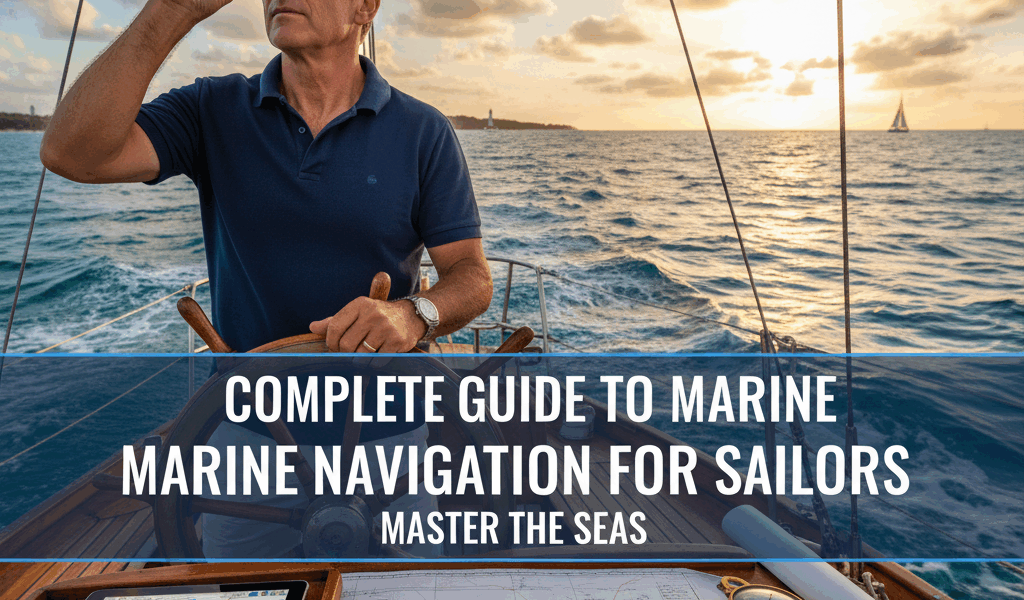
Marine navigation has gotten complicated with all the electronic gadgets and apps flying around.
Understanding Charts
Nautical charts are your primary navigation tool. Unlike road maps, they show water depths, bottom characteristics, navigation aids, hazards, and coastal features. Learning to read them fluently is absolutely essential for safe sailing.
Chart scales vary from harbor plans at 1:10,000 to ocean charts at 1:1,000,000 or smaller. Always use the largest scale chart available for detailed piloting. I keep multiple scales aboard for different situations.
Depth soundings show water depth at mean lower low water—the average of the lowest daily tides. Actual depth is usually more, but always plan for the charted depth as your safety margin. I learned this lesson early.
Contour lines connect points of equal depth and show underwater topography. They help identify safe channels. Close contours indicate steep drop-offs; widely spaced contours mean gradual slopes. Reading contours becomes second nature with practice.
Chart symbols are standardized internationally. Learn the symbols for rocks, wrecks, shoals, aids to navigation, and restricted areas. The Chart No. 1 publication explains all symbols in detail—keep a copy aboard.
Navigation Aids
Buoys, beacons, and lights help navigators find safe channels and identify hazards. Understanding this system is crucial for coastal navigation.
In the US, the lateral buoyage system uses red and green markers to define channels. The memory aid “Red Right Returning” means keep red markers to your right when returning from sea. Green markers go to port. Simple and effective.
Cardinal marks used internationally indicate safe water relative to the mark. A north cardinal mark means safe water is to its north. These take some getting used to if you’re accustomed to the US system.
Lights have characteristic patterns that identify them. A light might flash every 4 seconds, show alternating colors, or exhibit a distinctive sequence. Your chart and light list describe each light’s characteristics precisely.
Range markers are pairs of lights or daymarks aligned to show a safe channel centerline. When the markers line up vertically, you’re on the range. They’re extremely precise—I trust ranges more than GPS in tight channels.
Dead Reckoning
Dead reckoning estimates your current position based on course steered, speed, and time from a known position. It’s the fundamental navigation technique, essential when other methods fail.
Start from a known position—a fix from visual bearings, GPS, or other method. Record the time, course, and speed. After a period of time, calculate how far you’ve traveled on that course. Basic but reliable.
Current and wind affect your actual track over the bottom. Estimate set and drift to adjust your DR position. The difference between DR and your next fix shows accumulated error and helps you understand local conditions.
Maintain a consistent log of courses steered and speeds. This discipline makes DR plotting possible and creates a record for later analysis. I’ve gone back through old logs to solve navigation mysteries.
Piloting Techniques
Piloting uses visual observations and chart work to navigate in coastal waters. It combines traditional techniques with practical skills refined over centuries.
Taking bearings is fundamental. Use a hand bearing compass to measure the direction to identified landmarks. Plot these bearings on the chart—where they cross is your position.
Two bearing lines give a position with some uncertainty. Three lines provide a more accurate fix and show potential bearing error. The small triangle where three bearings meet is called a “cocked hat.” Smaller is better.
Probably should have led with this section, honestly. Relative bearings use the ship’s heading as reference. Measure the angle between your heading and the observed object. Convert to true bearing by adding your compass heading. Takes practice but becomes automatic.
Distance estimation helps when bearings are insufficient. Various methods work—stadimeter readings, vertical angle measurements, or radar ranges. Combined with bearings, they strengthen your fix significantly.
Celestial Navigation Basics
Celestial navigation uses observations of the sun, moon, stars, and planets to determine position. Though GPS has largely replaced it for practical navigation, the skills remain valuable as backup.
The sextant measures the angle between a celestial body and the horizon. Combined with precise time, this angle allows calculation of a line of position. It’s elegant mathematics applied to practical problems.
A noon sight of the sun gives latitude directly—the sun’s maximum altitude equals 90 degrees minus your distance from its geographic position. This is the easiest celestial technique to learn and impressively accurate.
Star sights at twilight provide multiple lines of position that cross to give a fix. The skills take time to develop but provide genuine independence from electronic systems. I practice regularly to stay current.
Electronic Navigation
If you are selecting hardware rather than learning plotting technique, start with our guide to marine navigation systems and boat GPS setups. It compares the components, current chartplotter families, networking, and backup choices.
GPS revolutionized marine navigation. Accurate position available instantly, continuously, anywhere on the globe. But understanding its capabilities and limitations is essential.
GPS accuracy varies with conditions. Standard GPS provides positions within about 15 meters. Differential corrections improve this significantly. WAAS-enabled units are accurate within about 3 meters—remarkable technology.
That’s what makes modern navigation endearing to us sailors—the precision available at our fingertips. But chart accuracy may not match GPS accuracy. Charts in some regions are based on surveys from the 1800s. Your GPS position might be more accurate than the chart it’s displayed on.
AIS transponders broadcast ship identification and position. Integrating AIS with your plotter shows traffic around you. Class B transponders suitable for recreational boats are now affordable and highly recommended.
Radar provides position relative to fixed objects regardless of visibility. It excels in fog and at night. Learning to interpret radar takes practice but adds a crucial safety dimension I wouldn’t sail without.
Depth sounders provide continuous depth information. Comparing soundings to charted depths helps verify position and warn of shoaling water. Simple but effective backup to GPS.
Passage Planning
Good navigation starts before leaving the dock. I plan my routes carefully, considering hazards, weather, tides, and traffic. This preparation has prevented problems countless times.
Identify waypoints along your route—departure points, course changes, arrival points. Enter them into your plotter and verify the calculated courses and distances make sense. Double-check the math.
Note hazards to avoid. Plot danger bearings that keep you clear. Identify bail-out harbors in case conditions deteriorate. Hope for the best, plan for problems.
Calculate tidal heights and currents for critical times. A bar entrance safe at high tide may be dangerous at low water. Current can significantly affect passage times—sometimes by hours.
Check weather forecasts and understand how conditions might change. Know your limits and the boat’s limits. Have a plan for what you’ll do if forecasts are wrong, because they will be.
Night Navigation
Navigation at night presents special challenges. Visual references disappear, light identification replaces landmark recognition, and fatigue affects judgment.
Identify lights before departure. Know what sequence each light should show and its approximate bearing as you proceed. A surprise light can indicate you’re not where you think—that’s happened to me more than once.
Preserve night vision by using red lights below and minimizing bright displays. Night vision takes 30 minutes to fully develop and can be lost in seconds from bright light. Protect it carefully.
Use radar more at night. It shows what you can’t see—boats, land, rain squalls. Verify radar returns against charted features to confirm your position.
Keep a particularly careful watch. Other boats may not have their lights properly configured or visible. Traffic is harder to assess without visual references.
Navigation in Restricted Visibility
Fog, rain, and snow reduce visibility and increase risk. Slow down, post lookouts, and rely more heavily on instruments. I’ve navigated through some dense fog and it’s always nerve-wracking.
Sound fog signals as required by rules of the road. Listen carefully for others’ signals. Understand what different sounds mean about vessel type and activity.
Radar becomes primary in fog. But radar has blind spots and limitations. Small boats may not show clearly, and rain can mask returns. Don’t trust it completely.
Consider anchoring if conditions allow and risk warrants. Sometimes the safest action is to stay put until visibility improves. There’s no shame in waiting it out.
Building Navigation Skills
Navigation skill develops through practice and study. Start with basic chart work and piloting in familiar waters. Gradually expand your range and techniques.
Take formal courses in navigation. US Power Squadrons and Coast Guard Auxiliary offer excellent training. Advanced courses cover celestial navigation and offshore techniques. I’ve taken multiple courses and each one taught me something valuable.
Practice traditional methods even when GPS is working perfectly. When electronics fail—and they will eventually—you need backup skills ready.
Sail with experienced navigators and learn from their techniques. Every accomplished navigator has stories of mistakes they learned from. Listen to those stories.
Final Thoughts
Good navigation combines traditional skills with modern technology. Master the basics, understand your instruments’ capabilities and limitations, and always have backup methods available. The investment in navigation skills pays dividends in safety and confidence on the water. It’s what separates competent sailors from those hoping for the best.



Stay in the loop
Get the latest sail the seas mag updates delivered to your inbox.