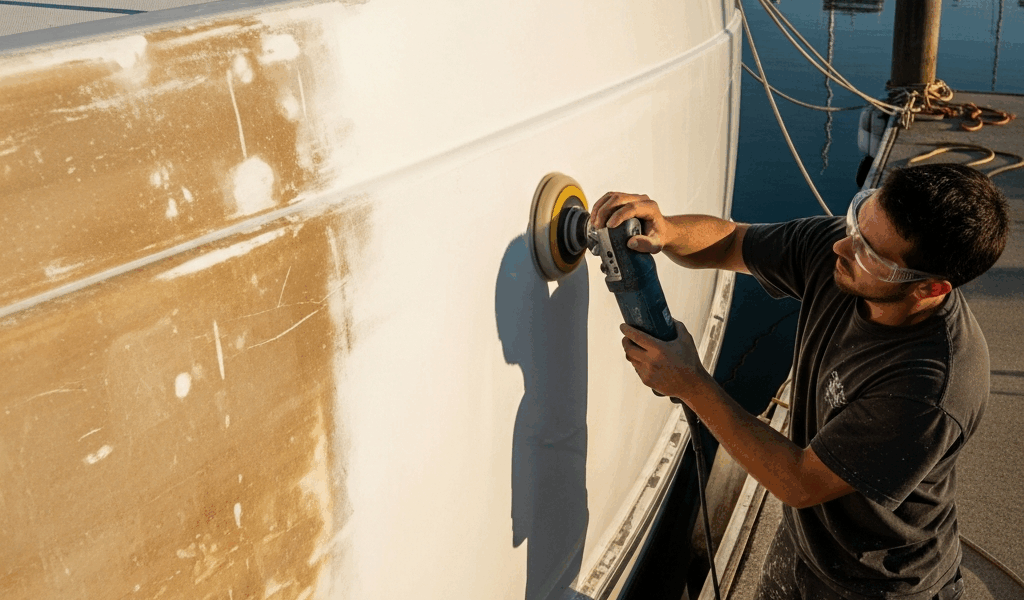
Your boat’s gelcoat has gone from glossy white to a chalky, oxidized mess that makes the hull look ten years older than it is. You have tried dish soap and elbow grease and it barely made a difference. The problem is not dirt — it is UV damage to the gelcoat surface, and it needs a dedicated fiberglass cleaner that can cut through oxidation without damaging what is left of the finish.
What Gelcoat Oxidation Actually Is
Gelcoat is a resin coating that protects the fiberglass underneath. UV exposure breaks down the surface layer over time, creating a chalky white residue that dulls the finish and makes the hull look neglected. This is oxidation — not staining, not dirt — and it requires a product that chemically or mechanically removes the degraded surface layer to reveal fresh gelcoat underneath.
Light oxidation feels rough to the touch and looks hazy. Heavy oxidation is visibly chalky — run your hand across the hull and it leaves a white residue on your fingers. The difference matters because light oxidation responds to one-step cleaners, while heavy oxidation needs a more aggressive rubbing compound or a multi-step restoration process.
The Best Fiberglass Boat Cleaners by Severity
For light oxidation and regular maintenance: Star Brite Instant Hull Cleaner is the easiest option. Spray it on, wait 60 seconds, rinse off. It handles waterline stains, light oxidation, and general grime without scrubbing. The acid-based formula dissolves mineral deposits and surface oxidation on contact. Good for monthly maintenance. Not strong enough for serious oxidation.
For moderate oxidation: Meguiar’s M4916 Oxidation Remover is a one-step liquid compound that cuts through medium oxidation and restores gloss in a single pass. Apply with a microfiber pad or buffer, work in small sections, and wipe clean. It contains diminishing abrasives that start aggressive and finish smooth, leaving a decent shine without a separate polishing step. This is what I reach for on a boat that has been sitting in the sun for a season without waxing.
For heavy oxidation: 3M Marine Restorer and Wax is the heavy hitter. It is a rubbing compound that removes severely degraded gelcoat and leaves a protective wax layer behind. Apply with a rotary or dual-action buffer for best results — hand application works but requires serious effort on a full hull. For truly neglected boats with chalky, flaking gelcoat, this is the product that brings them back from the dead. I used it on a 1990s Catalina 27 that had not been waxed in five years and the transformation was dramatic.
For waterline stains specifically: MaryKate On & Off Hull Cleaner handles the yellow-brown waterline stains that regular cleaners cannot touch. It is an acid cleaner — wear gloves and eye protection, work in a ventilated area, and keep it off painted surfaces. Apply, let it sit for 2 to 5 minutes, scrub with a brush, and rinse thoroughly. The waterline will look like new hull.
Application Tips That Make the Difference
Work in small sections — two feet by two feet maximum. Compounds and cleaners dry fast in the sun, and dried compound is much harder to remove and can leave haze marks. If you cannot work in shade, get up early and work before the hull heats up in direct sun.
Use a dual-action buffer on moderate to heavy oxidation. Hand application works on small areas but a full hull by hand is exhausting and inconsistent. A basic dual-action polisher from Harbor Freight ($50-70) paired with marine compound pads delivers professional results without professional cost. The machine does in 2 hours what your arm does in 8.
Always follow oxidation removal with wax or sealant. Removing oxidation exposes fresh gelcoat that is immediately vulnerable to UV again. A good marine wax (Collinite 885 is the standard recommendation among boat owners for a reason — it lasts 6+ months) or a ceramic coating protects the restored surface and keeps you from repeating the whole process next season.
Rinse with fresh water before and after. Saltwater residue interferes with cleaners and compounds. A thorough freshwater rinse before you start removes salt, and a final rinse after waxing prevents salt from embedding in the fresh wax layer.
What to Avoid
Household cleaners — dish soap, bathroom cleaners, bleach — do not belong on gelcoat. Dish soap strips wax but does not address oxidation. Bleach damages gelcoat over time and accelerates the UV degradation you are trying to fix. Bathroom cleaners with abrasives can scratch the surface.
Pressure washers above 1500 PSI can damage gelcoat, especially on older boats with thin or compromised coatings. Use a garden hose or a pressure washer on the lowest setting for rinsing. The cleaning products do the work — high pressure just risks blasting through the gelcoat layer you are trying to save.



Stay in the loop
Get the latest sail the seas mag updates delivered to your inbox.