
Exploring the Beneteau Oceanis 38: A Modern Cruiser for the Avid Sailor
The Beneteau Oceanis 38 stands out as a versatile and innovative cruiser. Designed for the recreational sailor, it combines performance with comfort. Since its release, it has earned praise for its adaptability, offering configurations to meet different needs.

Design and Build
The Oceanis 38 was launched by Beneteau, a well-respected French yacht manufacturer. It reflects a commitment to quality and innovation. The hull features a sleek and modern design, ensuring good performance at sea. A chined hull enhances stability, a feature appreciated by both novice and experienced sailors.
Three distinct layouts are available: Weekender, Cruiser, and Daysailer. Each offers a unique arrangement, tailoring to specific preferences. The Weekender variant is more basic, suitable for quick getaways. The Cruiser model includes more amenities for extended trips. Meanwhile, the Daysailer option suits those focusing on day sailing with minimal overnight stays.
Interior Layout
The interior is spacious, offering an open-plan style. The design accommodates a wide, airy saloon. Large windows allow for ample natural light, creating a pleasant ambiance inside. Various layouts offer from two to three cabins, allowing flexibility in sleeping arrangements.
The saloon serves as the central hub, with seating around a sizeable dining table. Storage space is ample, ensuring all necessities have their place. The galley is efficient, with necessary appliances accessible for meal prep. Depending on the configuration, one or two heads are available, providing adequate facilities for guests.
Performance at Sea
The Oceanis 38’s performance distinguishes it from many other cruisers. The twin rudders contribute to excellent maneuverability. This feature is particularly beneficial when sailing in challenging conditions. Whether in light winds or strong gusts, the Oceanis 38 delivers a solid performance.
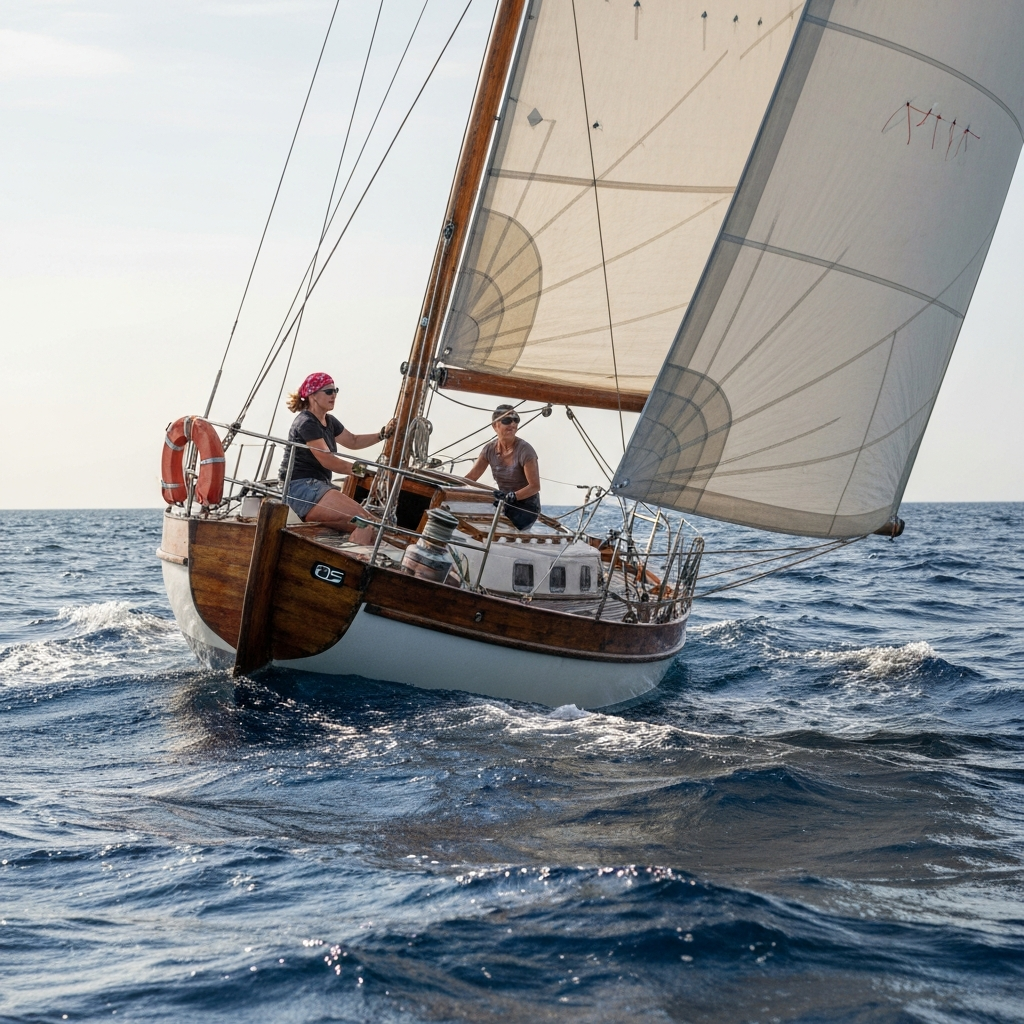
A comfortable helm station provides clear visibility. With its thoughtful layout, handling the boat becomes intuitive even with a small crew. The deck plan facilitates easy movement, whether adjusting sails or handling mooring lines.
Innovative Features
A standout feature is the removable bulkhead. This unique option allows sailors to convert the layout for more open space. This adjustment is simple, involving just a few steps to remove the bulkhead and transform the area.
The mast is set further aft, which balances the sail plan. This change opens up more space both on deck and below. It also optimizes the boat’s center of gravity, enhancing its performance and stability at sea.
The Customization Aspect
The level of customization available is impressive. Owners can select from a variety of finishes and materials. This personalization allows for style matching personal taste. Various hardware and accessory choices ensure the boat meets practical needs while reflecting the owner’s character.
The cruiser and weekender variants also offer different cockpit arrangements. Options include the addition of a folding swim platform. This enhances the vessel’s appeal for leisure activities and water sports enthusiasts.
Technology Integration
Modern technology plays a significant role in the Oceanis 38. Navigation systems are state-of-the-art, making for safe and efficient voyages. The availability of autopilot systems helps reduce crew demands, useful during longer passages.
The boat is equipped with essential connectivity options. These features allow for updates on weather conditions. They also aid in communication, adding safety and convenience to every journey.
Community and Resale Value
Owners enjoy a vibrant community, fostering interaction among sailors. This network provides support, sharing insights about handling and maintenance. Owners often exchange information about their modifications and experiences.
Resale value remains strong, a testament to its quality and desirability. The Beneteau brand holds significant recognition. Keeping the boat in good condition maintains its appeal in the used boat market.
Environmental Aspects
Sustainability is a consideration in the design of modern yachts. The Oceanis 38 incorporates efficiency in its engine and systems. Efforts to minimize environmental footprint include efficient fuel usage and the optional addition of solar panels for auxiliary power.
The hull design also contributes to lower drag, optimizing fuel efficiency. This thoughtful integration supports sustainable sailing practices, aligning with the values of environmentally conscious sailors.
Recommended Boating Gear
Stearns Adult Life Vest – $24.99
USCG approved universal life jacket.
Chapman Piloting & Seamanship – $45.00
The definitive guide to boating since 1917.
As an Amazon Associate, we earn from qualifying purchases.
Campaign Furniture — The Coolest Style Nobody Talks About
Campaign furniture has gotten complicated with all the modern reproductions flying around. As someone who’s been obsessed with this style since stumbling onto it at an estate sale five years ago, I learned everything there is to know about what makes campaign pieces special. Today, I will share it all with you.
There was this weird folding desk in the corner of the sale, all brass corners and these clever hinges that let it collapse flat. The tag said British Campaign, circa 1890 and listed a price I couldn’t remotely afford. But man, I couldn’t stop thinking about it for weeks afterward.
Where This Style Came From
Picture this: it’s the 1700s, you’re a British officer being shipped off to wherever the Empire is expanding this week. You want your creature comforts — a proper bed, a writing desk, somewhere to sit that isn’t a rock. But you also need everything to pack into trunks and survive months on a ship and mule carts through who-knows-where.
That’s the problem campaign furniture solved. Everything had to break down, fold up, or come apart into portable pieces. It had to be rugged enough to survive rough handling but still look respectable when some colonel showed up for tea in your tent.
The engineering that went into these pieces still blows my mind. Beds that fold to the size of a suitcase. Desks with hidden compartments for ink and paper that collapse in thirty seconds. Chests of drawers that split into two halves for carrying. These weren’t just furniture makers — they were problem solvers.
What Makes It Special
Probably should have led with this section, honestly. The details are where it gets really good. Campaign furniture is basically the Swiss Army knife of antiques:
Brass corners everywhere. Not for decoration — for protection. Those corners take the beating when pieces get knocked around in transport, saving the wood underneath. Form following function before anyone thought to name it that.
Flush hardware. Regular furniture has knobs and pulls sticking out. Campaign pieces use recessed handles and flush mounts so nothing catches or breaks off in transit. I didn’t appreciate this until I moved my regular furniture and a drawer pull broke off.
Teak and mahogany. These weren’t random choices. Both woods handle humidity swings without cracking, resist bugs, and age beautifully. Guys stationed in tropical colonies couldn’t use pine — it would’ve rotted in months.
Ingenious joinery. Knock-down fittings, secret hinges, pieces that slide together — the craftsmanship is hidden but brilliant. That’s what makes campaign furniture endearing to us woodworking types — it rewards close inspection.
The Iconic Pieces
A few designs really stand out from the hundreds that were made:
The camp chair is probably the ancestor of every folding chair you’ve ever used. Simple X-frame with canvas or leather stretched across it. Packs flat, sets up in seconds. There’s a reason the design hasn’t really changed in 200 years — it was right the first time.
Officer desks are amazing and honestly my grail piece. The good ones have compartments for everything — inkwells, paper, wax seals, candles. Fold it up and it looks like a nondescript box. Open it and you’ve got a complete office. The engineering is bonkers.
Campaign chests split horizontally so two people can carry each half. The brass hardware is usually pretty elaborate since this was the showcase piece — the one visitors would see in your tent. Status symbols that also happened to be completely practical.
Why I Think This Style Still Works
We live in small apartments now. We move around a lot. We don’t want to haul heavy furniture up narrow stairwells every time we change cities. Campaign furniture was literally designed for this lifestyle, just 150 years early. The Victorians were solving our problems before we had them.
Modern designers have definitely noticed. You see campaign-inspired stuff in West Elm and Restoration Hardware catalogs all the time. Some of it is actually pretty good, honestly. The folding logic and brass hardware translates really well to contemporary designs.
I built a campaign-style end table last year — my first attempt at knock-down joinery. It was… humbling. Those Victorian-era craftsmen knew things I’m still figuring out. Getting the tolerances right so pieces fit snugly but still come apart easily is way harder than it looks. Mine wobbles slightly. I’m not proud of that but I’m learning.
Collecting the Real Stuff
If you want actual antique campaign furniture, here’s what I’ve learned from years of hunting and a few expensive mistakes:
Prices vary wildly depending on provenance. A piece with documentation — letters, receipts, whatever — can be worth ten times more than the same design without history. I saw two nearly identical campaign chests sell at different auctions, one for $800 and one for $6,000. The expensive one came with a letter from the officer who’d owned it.
Check the brass carefully. Original hardware should show wear patterns that make sense — more worn where hands actually touched it. Reproduction hardware is shiny everywhere or has fake aging that’s too uniform. Trust your gut on this.
The wood patina matters too. Real age gives you color depth that no stain can replicate. If it looks too perfect, it’s probably modern or heavily refinished.
Auctions are your friend. I’ve seen campaign pieces go for surprisingly reasonable prices at regional auctions because people don’t know what they’re looking at. The style isn’t as famous as Victorian or Mid-Century Modern, which works in your favor as a buyer.
Making Your Own
This is absolutely doable if you’ve got intermediate woodworking skills. Start with something simple like a folding camp stool. Once you understand how the hinges and pivots work, you can scale up to more ambitious projects.
The key insight is that everything has to be designed in the folded state first. Figure out how it packs away, then work backwards to the assembled form. Otherwise you end up with something that theoretically folds but practically doesn’t work — ask me how I know.
I still want to build a proper officer desk someday. It’s on my list, right after I finish learning brass inlay work. These things take time, but that’s part of what makes this style so rewarding to study and work with.
Recommended Woodworking Tools
HURRICANE 4-Piece Wood Chisel Set – $13.99
CR-V steel beveled edge blades for precision carving.
GREBSTK 4-Piece Wood Chisel Set – $13.98
Sharp bevel edge bench chisels for woodworking.
As an Amazon Associate, we earn from qualifying purchases.




Stay in the loop
Get the latest sail the seas mag updates delivered to your inbox.