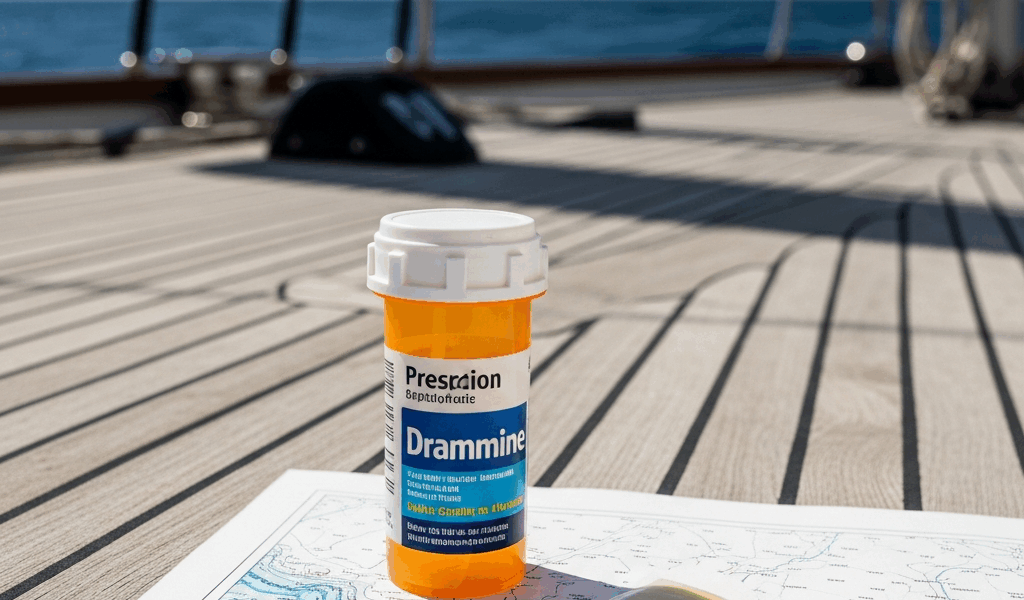
Scopolamine and Dramamine are not the same medicine. A scopolamine patch is a prescription antimuscarinic approved for adults and designed to work for up to three days. Original Formula Dramamine contains the OTC antihistamine dimenhydrinate, which has a shorter label interval. Dramamine Less Drowsy contains a different antihistamine, meclizine. All can impair alertness, and none should be combined casually.
For sailors, the decision is not simply “patch for a long passage, pill for a day sail.” Medical history, other medicines, age, heat exposure, previous side effects, and watchkeeping duties all matter. A prescriber or pharmacist should review the plan before departure, especially because scopolamine carries important eye, urinary, neurologic, heat-regulation, and interaction warnings.
Scopolamine vs Dramamine at a glance
| Question | Scopolamine patch | Original Formula Dramamine |
|---|---|---|
| Active ingredient | Scopolamine | Dimenhydrinate |
| Drug type | Antimuscarinic/anticholinergic | First-generation antihistamine |
| U.S. access | Prescription | Over the counter |
| Approved population | Adults; not FDA-approved for pediatric use | Product-specific OTC age directions |
| Common label timing | Apply at least 4 hours before effect is needed | Take 30–60 minutes before motion |
| Common label duration | One patch for up to 3 days | Shorter acting; follow package repeat directions |
| Important alertness effects | Drowsiness, dizziness, disorientation, blurred vision | Marked drowsiness and impaired coordination can occur |
| Distinctive concerns | Hyperthermia/reduced sweating, eye effects, urinary or GI retention, confusion or hallucinations, withdrawal after removal | Sedation, alcohol/CNS-depressant interaction, anticholinergic effects |
This table summarizes common U.S. labeling, not individualized instructions. Follow the exact prescription and package supplied to you. See the current DailyMed scopolamine label, MedlinePlus scopolamine guide, and the Drug Facts panel on the exact dimenhydrinate product.
First, identify which Dramamine you mean
“Dramamine” is a brand family, not one active ingredient. In the United States:
- Original Formula Dramamine commonly contains dimenhydrinate.
- Dramamine Less Drowsy commonly contains meclizine.
Those two antihistamines have different label schedules. The front of the box is not enough—read the active-ingredient line. Our separate meclizine vs Dramamine guide explains that distinction in detail.
How the scopolamine patch is used
The U.S. prescribing information indicates one transdermal system on the hairless skin behind one ear at least four hours before the antiemetic effect is needed, for use up to three days. If therapy is required longer, the label instructs removal of the old patch and placement of a new one behind the other ear. Only one patch should be worn at a time.
Those are label facts, not a recommendation that every sailor should use scopolamine. It is prescription medicine and the prescriber should assess whether it is appropriate.
Patch handling matters
- Do not cut the patch.
- Apply it to clean, dry, hairless skin behind one ear.
- Wash hands thoroughly with soap and water after applying or removing it.
- Avoid touching the adhesive surface; accidental transfer to an eye can dilate the pupil and blur vision.
- Wear only one patch at a time.
- If it falls off, follow the patient instructions rather than taping a damaged or contaminated patch back on.
- After removal, fold it sticky-side together and dispose of it where children, pets, and others cannot contact or swallow it.
- Remove it before an MRI as directed by the labeling.
Do not improvise with tape, cutting, multiple patches, or altered application sites without guidance from the prescriber or pharmacist. The delivery system controls how the medicine is released.
The 2025 FDA hyperthermia warning
The FDA’s June 2025 safety communication says scopolamine patches can increase body temperature and reduce sweating. Severe heat-related complications included hospitalization and death. Reported onset was usually within 72 hours of application, and most reported cases involved children age 17 or younger or adults age 60 or older.
Hot cockpits, tropical sun, enclosed cabins, dehydration, and strenuous deck work make this warning operationally important for sailors. FDA advises removing the patch and contacting a healthcare professional if body temperature rises or sweating is reduced in warm conditions. Symptoms can persist for hours or days after removal because absorbed medicine remains in the body. External heat sources can worsen the risk.
A crew plan should not treat unexpected confusion, overheating, or reduced sweating as ordinary seasickness. Move the person to a safer/cooler setting when possible, stop hazardous duties, and obtain medical guidance promptly. Use emergency communication when symptoms are severe or the person has altered consciousness.
Drowsiness and watchkeeping
Scopolamine may cause drowsiness, dizziness, disorientation, blurred vision, or confusion. Dimenhydrinate may cause marked drowsiness and problems with coordination. Alcohol and other medicines that depress the central nervous system can worsen impairment.
Someone who is impaired should not steer, stand a solo watch, climb, work near winches, go forward in rough conditions, or operate machinery. “Less sedating” on average does not prove that a medicine is safe for a particular crew member. The CDC recommends considering a trial before travel because people respond differently; that trial should occur in a safe setting without vessel responsibilities.
Can you take Dramamine with a scopolamine patch?
Do not combine them unless the prescribing clinician or a pharmacist has reviewed the exact products and instructed you to do so. Scopolamine labeling warns about interactions with other anticholinergic medicines and with drugs that cause drowsiness or central-nervous-system effects. Dimenhydrinate and meclizine can add sedation and anticholinergic effects.
This is especially important because “Dramamine” may mean dimenhydrinate or meclizine. A clinician needs the active ingredient, strength, other medicines, health conditions, and intended duties—not only the brand name. The old idea of stacking a patch, an antihistamine, and supplements for extra coverage is not a safe general recommendation.
Who should discuss risks carefully with the prescriber?
Scopolamine is contraindicated in angle-closure glaucoma. The prescribing information and MedlinePlus also identify conditions that require assessment or monitoring, including:
- open-angle glaucoma;
- difficulty urinating or impaired urine flow;
- stomach or intestinal obstruction;
- seizures;
- psychotic disorders or a history of hallucinations or confusion;
- heart, liver, or kidney disease;
- pregnancy or breastfeeding;
- older age, particularly given central-nervous-system and heat-regulation risks; and
- use of sedating or anticholinergic medicines.
Seek urgent medical advice for eye pain or redness, blurred vision with halos, severe confusion, hallucinations, seizure, painful or difficult urination, high temperature or reduced sweating in heat, or another serious reaction. Remove the patch when the prescribing information instructs you to do so and contact a healthcare professional.
Children and scopolamine patches
Transdermal scopolamine is not FDA-approved for pediatric use, and safety and effectiveness in children have not been established. The FDA’s heat warning reports that most serious hyperthermia cases occurred in people age 17 or younger. CDC guidance also warns that scopolamine can cause dangerous adverse effects such as hallucinations and mental confusion in children and says it should be avoided for pediatric motion sickness.
Parents should not cut a patch, use part of one, or apply one based on an adult travel plan. Ask a pediatric clinician about behavioral prevention and any age-appropriate medication.
Withdrawal symptoms after patch removal
After using scopolamine for several days or longer, some people experience symptoms beginning 24 hours or more after removal. MedlinePlus lists difficulty with balance, dizziness, nausea, vomiting, stomach cramps, sweating, headache, confusion, muscle weakness, slow heart rate, or low blood pressure. Contact the prescriber if symptoms are severe.
This delayed effect is another reason to discuss multi-patch or extended-passage use before leaving. Do not assume symptoms after landfall are automatically lingering seasickness.
Which is better for a sailing trip?
There is no universal winner. The CDC Yellow Book lists meclizine or dimenhydrinate among adult options for mild motion exposure and scopolamine for moderate to intense longer-duration exposure. That is general travel-medicine guidance, not a substitute for individual screening.
- Scopolamine offers long duration but requires a prescription and carries distinct anticholinergic, eye, urinary, neurologic, heat, handling, and withdrawal concerns.
- Dimenhydrinate is easier to obtain and has a shorter label interval but can cause marked drowsiness.
- Meclizine has a longer OTC label interval than dimenhydrinate but still can cause drowsiness and has its own precautions.
- Alertness may decide the issue: any option that impairs a person is incompatible with safety-sensitive boat duties.
A useful pre-departure discussion with a clinician or pharmacist includes trip duration, expected heat, prior motion sickness, previous drug response, age, medical history, every medicine and supplement, and the person’s onboard responsibilities.
Non-drug prevention still matters
Behavioral measures can reduce the sensory conflict that drives motion sickness:
- look toward the horizon or another stable external reference;
- avoid reading and near-screen focus while moving;
- stay in a lower-motion part of the boat when practical;
- keep the head relatively still and recline when safe;
- sleep adequately before departure;
- avoid alcohol; and
- plan fresh air, hydration, and watch relief before symptoms escalate.
Evidence for ginger, acupressure bands, and other supplements is mixed, and “natural” products can still interact with medicines. Disclose them during the medication review.
Frequently asked questions
Is scopolamine the same as Dramamine?
No. Scopolamine is a prescription antimuscarinic patch. Original Formula Dramamine contains dimenhydrinate, while Dramamine Less Drowsy contains meclizine in the United States.
Can a scopolamine patch be cut?
No. The prescribing information says not to cut the transdermal system. Cutting can disrupt drug delivery and was noted in an FDA hyperthermia case report.
Can you wear two scopolamine patches?
The label says to wear only one at a time. Do not add another patch because symptoms persist; contact the prescriber or pharmacist.
What if the patch falls off while sailing?
Follow the supplied patient instructions. MedlinePlus advises discarding the fallen patch and applying a new one to the hairless area behind the other ear. Do not reuse a contaminated patch.
Is scopolamine non-drowsy?
No. Drowsiness, dizziness, disorientation, and blurred vision can occur. A person should not perform hazardous boat duties until the individual effect is known.
Bottom line: a scopolamine patch lasts longer than Original Formula Dramamine, but it is not automatically the safer or better choice for a passage. It requires prescription screening, careful handling, heat awareness, and a plan for impaired alertness or adverse effects. Never stack motion-sickness drugs without professional review, identify the active ingredient in every product, and plan crew duties before leaving shore.
Medical review note: This article summarizes current FDA, DailyMed, MedlinePlus, and CDC information. It is educational and not individualized medical advice.




Stay in the loop
Get the latest sail the seas mag updates delivered to your inbox.